Entries
140
AI lexicon entries currently assigned to this category.

AI Topic Category
This page maps the Specialized Benchmarks and Metrics portion of the Lexicon Labs AI encyclopedia. It brings together the main concepts in this category, the tracks that organize them, and the related books and guides that make the topic easier to study.
Entries
AI lexicon entries currently assigned to this category.
Tracks
Taxonomy tracks that sit inside this category.
Top Entry Types
The most common entry types appearing in this topic cluster.
Specialized Benchmarks and Metrics is one of the active taxonomy categories in the Lexicon Labs AI encyclopedia. The current dataset includes 140 entries in this area, which makes it large enough to function as a real discovery surface rather than a placeholder page.
Use the sample entries as a fast orientation layer, then move into the AI encyclopedia preview or the related paperbacks and bundles if you want a longer learning path.
Track in Specialized Benchmarks and Metrics.
Track in Specialized Benchmarks and Metrics.
Track in Specialized Benchmarks and Metrics.
Track in Specialized Benchmarks and Metrics.
Track in Specialized Benchmarks and Metrics.
Long Context Benchmarks evaluate an AI model's ability to process and recall information from very long texts, often by embedding specific facts (like a "needle in a haystack") within extensive documents to test its retrieval.
"Needle in a Haystack" is a benchmark testing an AI model's ability to retrieve a specific piece of information (the "needle") hidden within a very long document (the "haystack"). It measures long-context understanding and retrieval.
The Greg Kamradt benchmark refers to evaluation methodologies, often involving synthetic data generation, for assessing large language models' performance in long context understanding and Retrieval-Augmented Generation (RAG) scenarios.
RULER (Retrieval-Augmented Language Understanding Evaluation and Ranking) is a benchmark for evaluating large language models' capacity to process and understand very long contexts. It specifically tests their effectiveness in Retrieval-Augmented Generation (RAG) scenarios.
Hsieh et al. refers to a benchmark designed to evaluate large language models' (LLMs) ability to process and reason over extremely long contexts, particularly for retrieval-augmented generation (RAG) tasks. It assesses performance in complex scenarios.
InfiniteBench is a specialized benchmark evaluating large language models' capacity to process and understand extremely long contexts. It assesses their performance in tasks requiring extensive information retrieval and generation from vast inputs.
"Zhang et al." refers to a benchmark designed to evaluate the performance of large language models in long-context understanding and retrieval-augmented generation (RAG) tasks. It assesses how well models process and utilize extensive information.
L-Eval is a benchmark designed to evaluate the long-context understanding and reasoning capabilities of large language models. It tests how well models process and synthesize information from very long texts, crucial for advanced AI applications.
An et al. is a benchmark designed to evaluate large language models' (LLMs) performance in long-context understanding. It specifically assesses their ability to process extensive text and perform retrieval-augmented generation (RAG) tasks effectively.
LongBench is a specialized benchmark designed to evaluate large language models' (LLMs) performance on tasks requiring processing and understanding very long input contexts. It assesses their ability to handle extensive information.
Bai et al. is a benchmark designed to evaluate large language models' ability to process and reason over extremely long contexts, particularly focusing on retrieval-augmented generation (RAG) tasks and complex information synthesis from extensive documents.
ZeroSCROLLS is a benchmark for evaluating large language models' zero-shot performance on tasks requiring very long context understanding and retrieval. It assesses how well models process extensive documents.
AI Hub
This hub connects the main AI learning surfaces on Lexicon Labs into one path: the encyclopedia preview, student-friendly books, themed bundles, and the tools that help readers turn concepts into working understanding.
Open GuidePaperback Hub
This page groups together Lexicon Labs paperback titles that help younger readers understand artificial intelligence, computation, and the people behind modern computing.
Open GuideTurn messy notes into study-ready flashcards and CSV exports for spaced repetition apps.
Open ToolTransform notes into visual diagrams and export them for sharing or studying.
Open ToolCreate citations for papers fast with APA/MLA formatting and copy-ready output.
Open ToolAnalyze clarity in essays, emails, and articles with readability scores and instant issue flags.
Open Tool
A clear and engaging guide to artificial intelligence for younger readers who are curious about how smart systems work.
View Paperback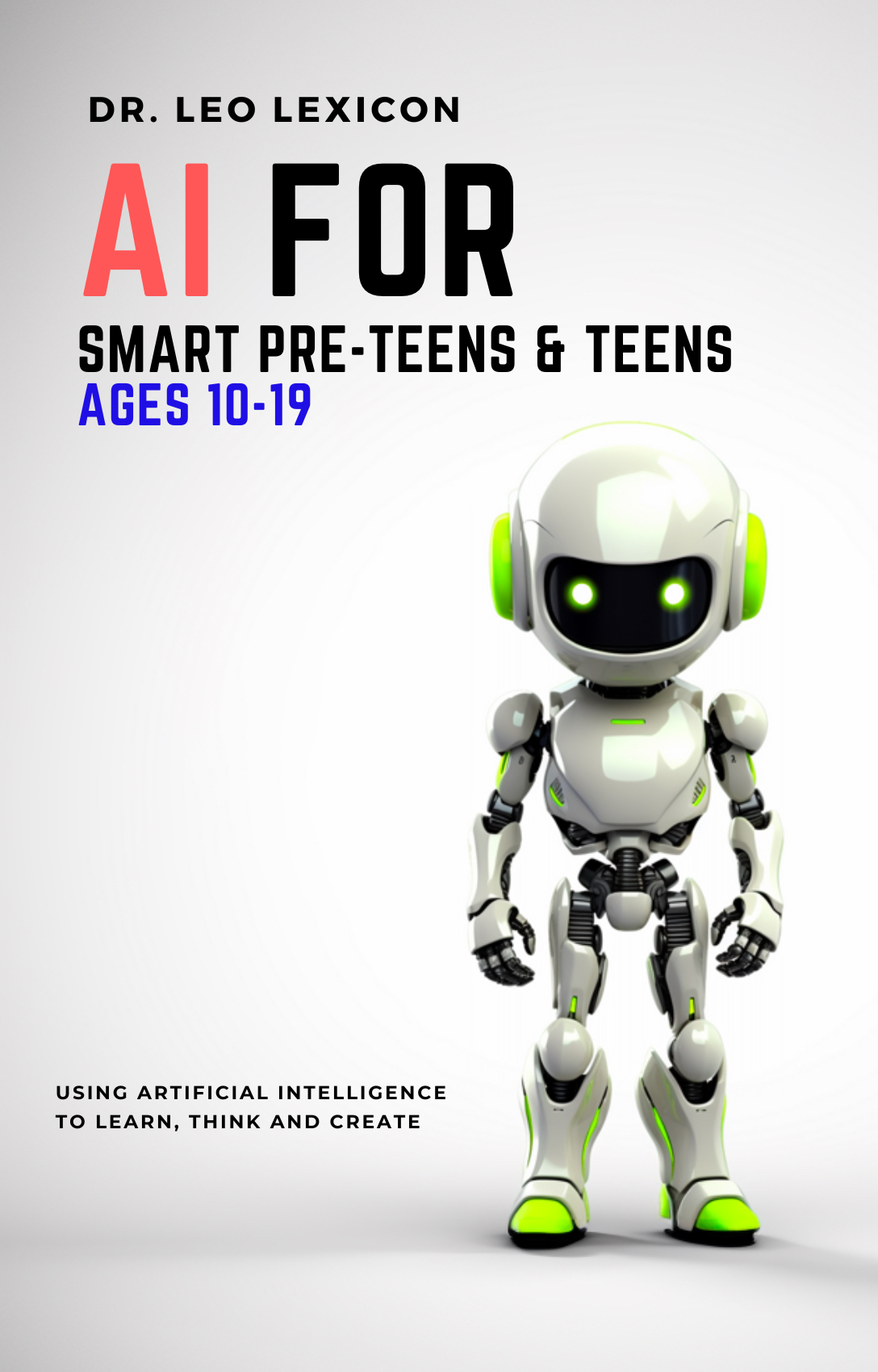
A student-friendly intro to AI concepts, real-world use cases, and practical skills for the next generation.
View Paperback
A biography of Alan Turing, the trailblazing mathematician and codebreaker whose ideas shaped modern computing and artificial intelligence.
View Paperback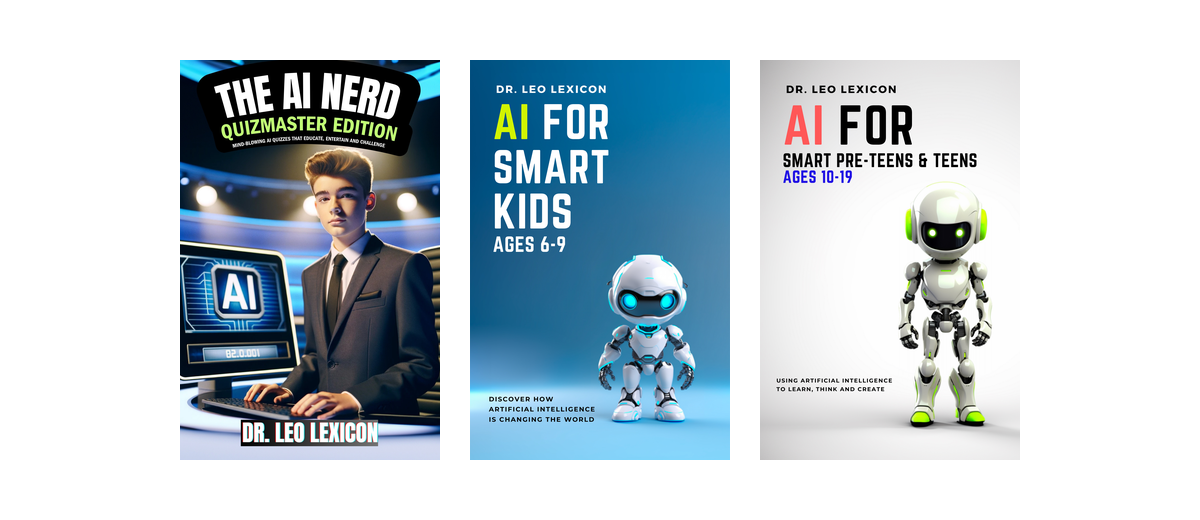
Books that explain artificial intelligence clearly for young and curious readers.
View Bundle
A practical introduction to coding concepts for young learners and beginners.
View Bundle