Entries
140
AI lexicon entries currently assigned to this category.

AI Topic Category
This page maps the Natural Language Processing portion of the Lexicon Labs AI encyclopedia. It brings together the main concepts in this category, the tracks that organize them, and the related books and guides that make the topic easier to study.
Entries
AI lexicon entries currently assigned to this category.
Tracks
Taxonomy tracks that sit inside this category.
Top Entry Types
The most common entry types appearing in this topic cluster.
Natural Language Processing is one of the active taxonomy categories in the Lexicon Labs AI encyclopedia. The current dataset includes 140 entries in this area, which makes it large enough to function as a real discovery surface rather than a placeholder page.
Use the sample entries as a fast orientation layer, then move into the AI encyclopedia preview or the related paperbacks and bundles if you want a longer learning path.
Track in Natural Language Processing.
Track in Natural Language Processing.
Track in Natural Language Processing.
Natural Language Processing (NLP) is a field of artificial intelligence that enables computers to understand, interpret, and generate human language. It combines computational linguistics with machine learning to process text and speech.
Computational Linguistics combines computer science and linguistics to enable computers to process, understand, and generate human language. It applies computational methods to analyze and model natural language data.
Noam Chomsky is a linguist whose theory of Generative Grammar proposed that human language is governed by an innate, universal set of rules. This concept significantly influenced early Natural Language Processing by emphasizing structural analysis.
Generative Grammar, a theory by Noam Chomsky, posits that human language is governed by innate, universal rules. It describes how speakers can generate and understand an infinite set of grammatical sentences through a finite set.
Transformational Grammar, proposed by Noam Chomsky, is a linguistic theory asserting that sentences have a deep structure representing meaning and a surface structure representing their spoken form. Transformational rules convert deep structures into surface structures.
Universal Grammar is a linguistic theory proposing that humans possess an innate, genetically determined set of principles and parameters common to all natural languages. This underlying structure facilitates rapid language acquisition.
Formal languages are precisely defined sets of symbol strings, governed by strict rules called grammars. They are crucial for specifying programming languages, data formats, and the theoretical foundations of natural language processing.
Context-Free Grammars (CFGs) are a formal system of rules describing how to generate valid strings in a language by replacing non-terminal symbols with other symbols. They are fundamental for defining programming language syntax and natural.
Parsing algorithms are computational methods that analyze a sequence of input tokens, such as words in a sentence, to determine its grammatical structure according to a formal grammar. They construct a parse tree.
The CYK Algorithm is a dynamic programming parsing algorithm. It efficiently determines if a string can be generated by a context-free grammar, typically in Chomsky Normal Form, and constructs all valid parse trees.
The Earley Parser is a dynamic programming algorithm for parsing sentences according to a context-free grammar. It builds a chart of states, efficiently handling ambiguity and left-recursion to determine all valid parses.
Chart parsing is an efficient technique in natural language processing that analyzes sentence structure by building a "chart" to store and reuse intermediate parse results. This method prevents recomputing the same subproblems, making parsing faster.
AI Hub
This hub connects the main AI learning surfaces on Lexicon Labs into one path: the encyclopedia preview, student-friendly books, themed bundles, and the tools that help readers turn concepts into working understanding.
Open GuidePaperback Hub
This page groups together Lexicon Labs paperback titles that help younger readers understand artificial intelligence, computation, and the people behind modern computing.
Open GuideTurn messy notes into study-ready flashcards and CSV exports for spaced repetition apps.
Open ToolTransform notes into visual diagrams and export them for sharing or studying.
Open ToolCreate citations for papers fast with APA/MLA formatting and copy-ready output.
Open ToolAnalyze clarity in essays, emails, and articles with readability scores and instant issue flags.
Open Tool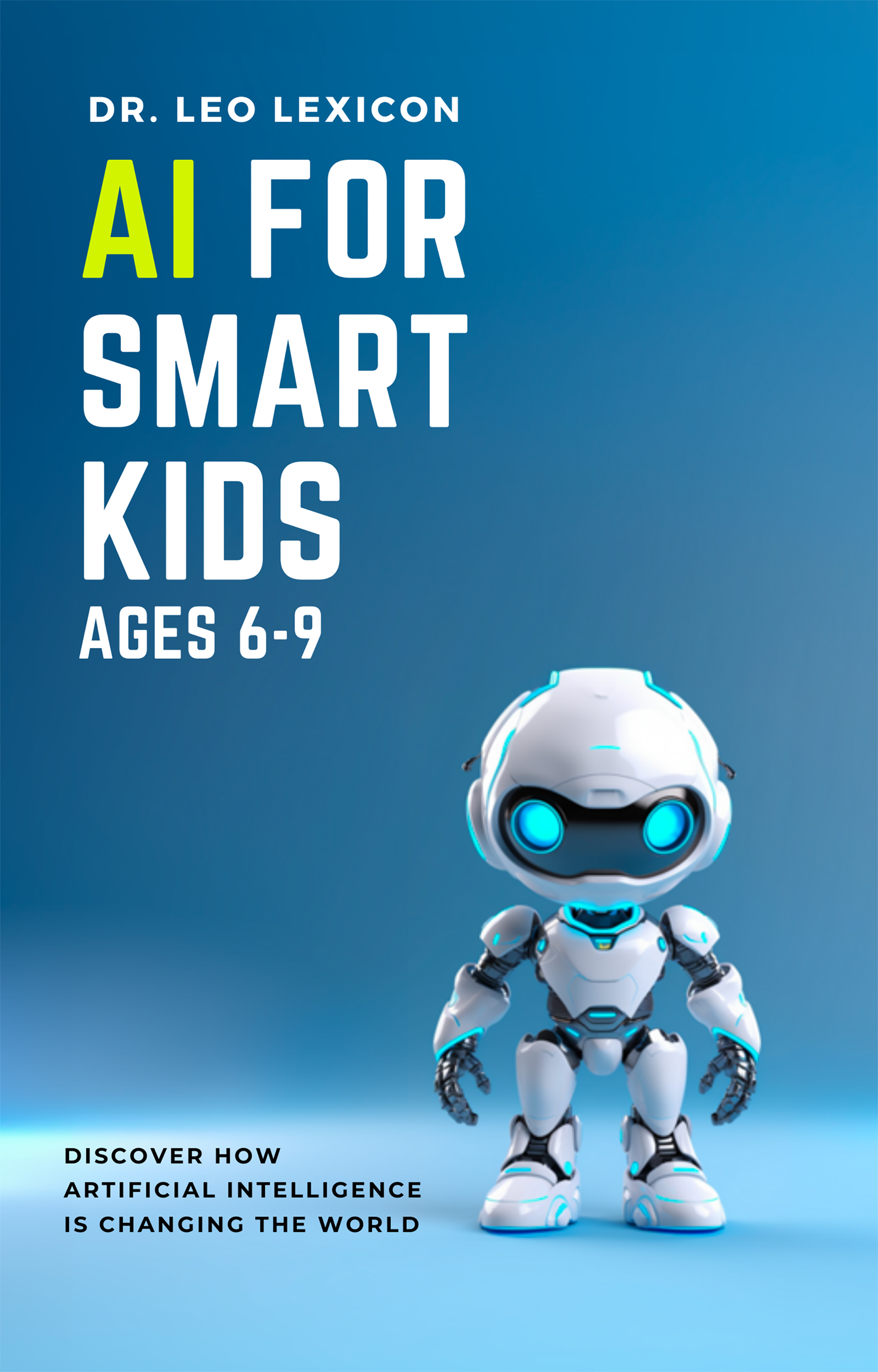
A clear and engaging guide to artificial intelligence for younger readers who are curious about how smart systems work.
View Paperback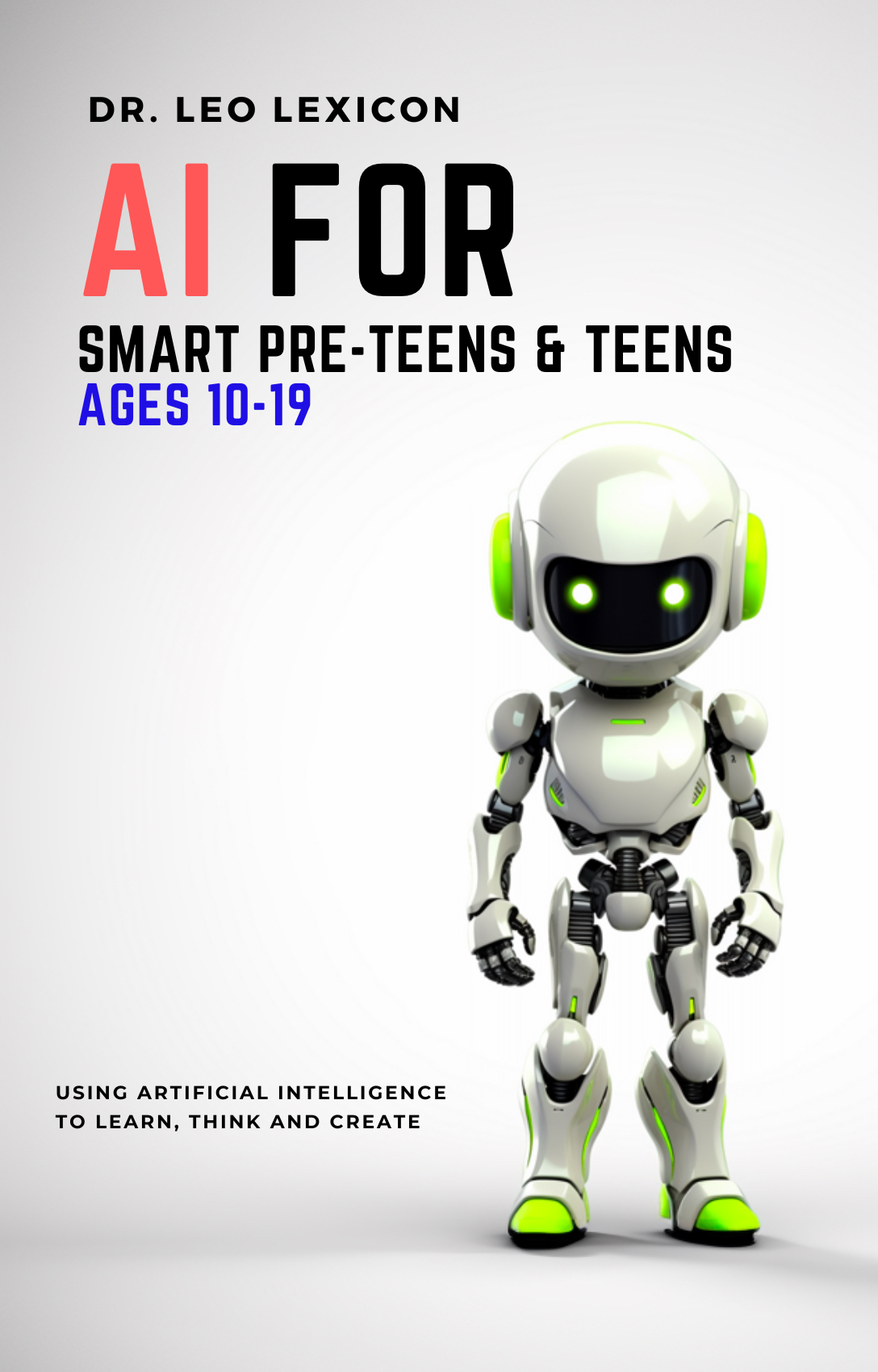
A student-friendly intro to AI concepts, real-world use cases, and practical skills for the next generation.
View Paperback
Learn core Python programming with approachable examples designed for teen learners and first-time coders.
View Paperback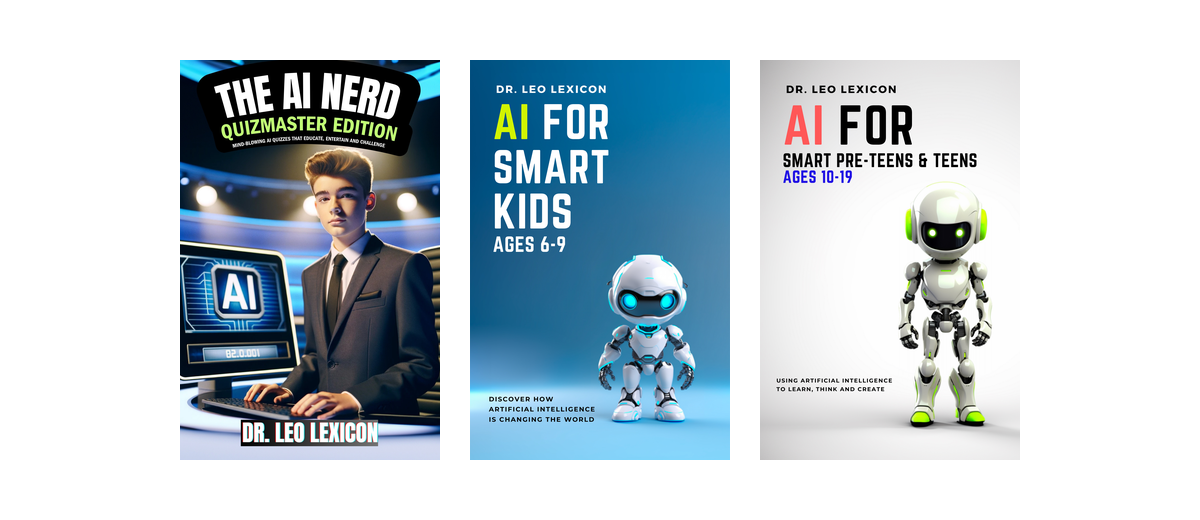
Books that explain artificial intelligence clearly for young and curious readers.
View Bundle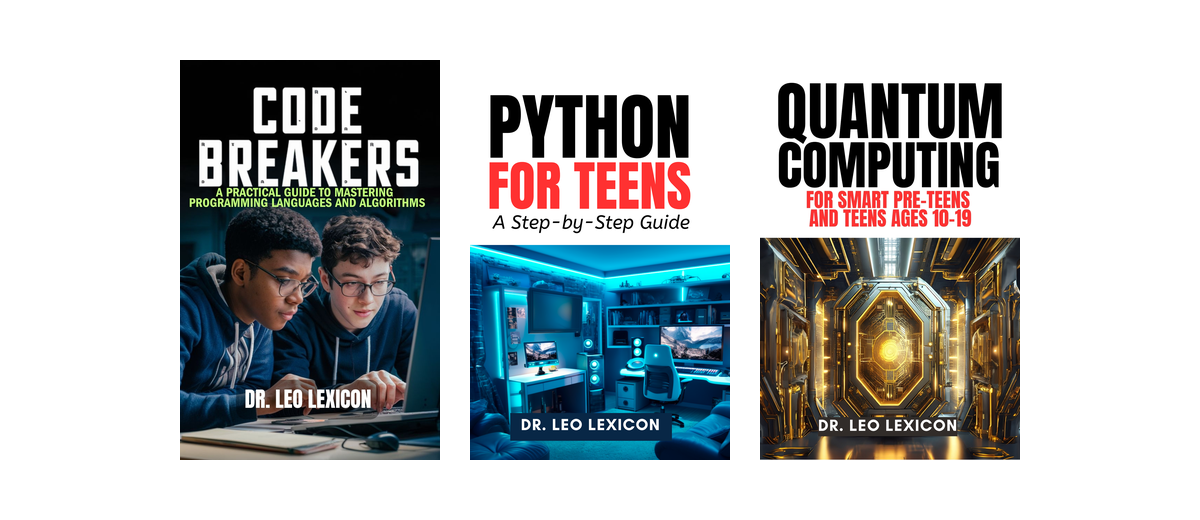
A practical introduction to coding concepts for young learners and beginners.
View Bundle