Entries
39
AI lexicon entries currently assigned to this category.

AI Topic Category
This page maps the Learning Paradigms and Methods portion of the Lexicon Labs AI encyclopedia. It brings together the main concepts in this category, the tracks that organize them, and the related books and guides that make the topic easier to study.
Entries
AI lexicon entries currently assigned to this category.
Tracks
Taxonomy tracks that sit inside this category.
Top Entry Types
The most common entry types appearing in this topic cluster.
Learning Paradigms and Methods is one of the active taxonomy categories in the Lexicon Labs AI encyclopedia. The current dataset includes 39 entries in this area, which makes it large enough to function as a real discovery surface rather than a placeholder page.
Use the sample entries as a fast orientation layer, then move into the AI encyclopedia preview or the related paperbacks and bundles if you want a longer learning path.
Track in Learning Paradigms and Methods.
Track in Learning Paradigms and Methods.
Imitation learning is a machine learning paradigm where an agent learns a policy by observing demonstrations from an expert, mapping observed states to actions without needing a reward function. It mimics desired behavior.
Domain adaptation is a machine learning technique that transfers knowledge from a source domain to a target domain, addressing distribution shifts to improve model performance on new data.
Continual learning is a machine learning approach where models adapt to new data over time while retaining knowledge from previous tasks, avoiding catastrophic forgetting.
Weak supervision is a machine learning approach that trains models using limited or noisy labeled data, often relying on indirect guidance rather than full annotations.
Representation learning is a machine learning approach where models automatically discover useful data representations, reducing the need for manual feature engineering.
Feature engineering is the process of transforming raw data into features that better represent the underlying problem to predictive models, improving their accuracy and performance. This often involves domain knowledge.
Dimensionality reduction is an AI technique that transforms high-dimensional data into a lower-dimensional representation. It aims to reduce the number of features or variables while retaining crucial information, simplifying models and improving computational efficiency.
Clustering is an unsupervised machine learning technique that groups similar data points together into clusters based on their inherent characteristics. It identifies patterns without prior labeled examples, revealing underlying structures in datasets.
K-means is an unsupervised machine learning algorithm that partitions 'n' data points into 'k' distinct clusters. Each point is assigned to the cluster whose centroid it is closest to, iteratively refining cluster centers.
A Gaussian Mixture Model (GMM) is a probabilistic model that represents data as a mixture of Gaussian distributions, used for clustering and density estimation, and estimates parameters using the Expectation-Maximization (EM) algorithm.
Expectation-maximization (EM) is an iterative algorithm for estimating model parameters with hidden variables, alternating between expectation and maximization steps to converge to optimal values.
Support Vector Machines (SVMs) are supervised learning models that find an optimal hyperplane to classify data. They maximize the margin between the closest data points of different classes, enabling robust separation for classification and regression.
AI Hub
This hub connects the main AI learning surfaces on Lexicon Labs into one path: the encyclopedia preview, student-friendly books, themed bundles, and the tools that help readers turn concepts into working understanding.
Open GuidePaperback Hub
This page groups together Lexicon Labs paperback titles that help younger readers understand artificial intelligence, computation, and the people behind modern computing.
Open GuideTurn messy notes into study-ready flashcards and CSV exports for spaced repetition apps.
Open ToolTransform notes into visual diagrams and export them for sharing or studying.
Open ToolCreate citations for papers fast with APA/MLA formatting and copy-ready output.
Open ToolAnalyze clarity in essays, emails, and articles with readability scores and instant issue flags.
Open Tool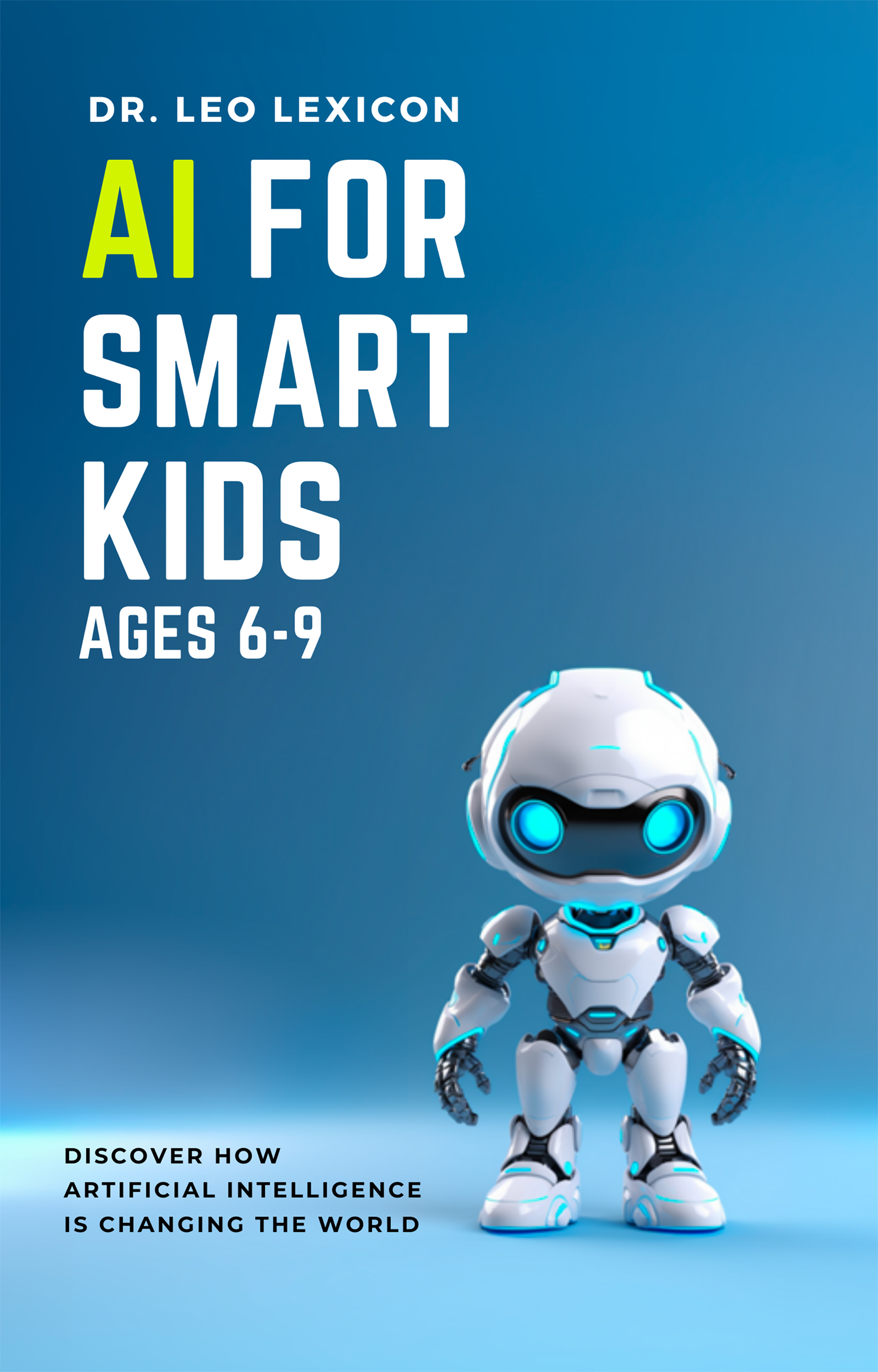
A clear and engaging guide to artificial intelligence for younger readers who are curious about how smart systems work.
View Paperback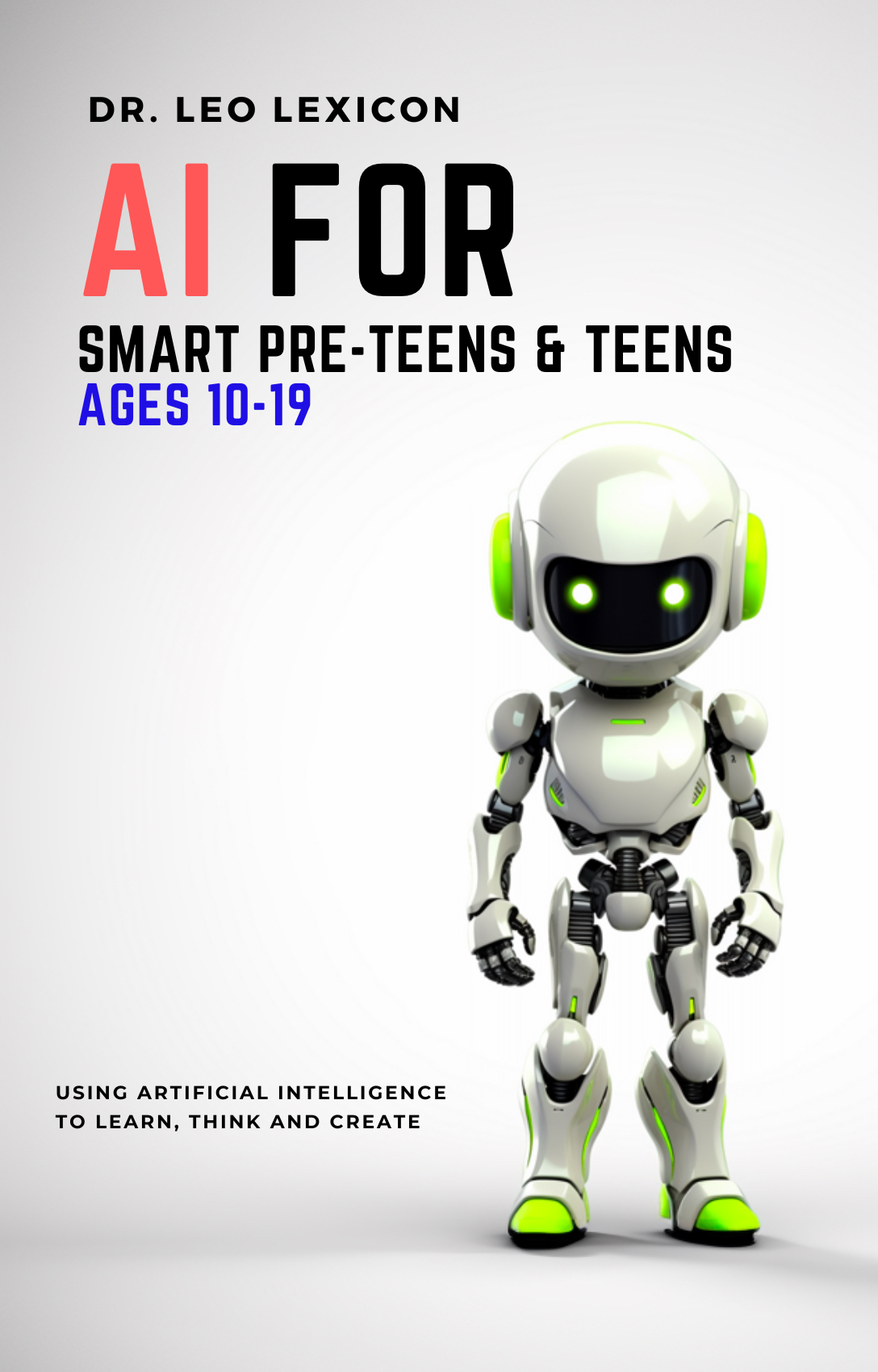
A student-friendly intro to AI concepts, real-world use cases, and practical skills for the next generation.
View Paperback
A biography of Alan Turing, the trailblazing mathematician and codebreaker whose ideas shaped modern computing and artificial intelligence.
View Paperback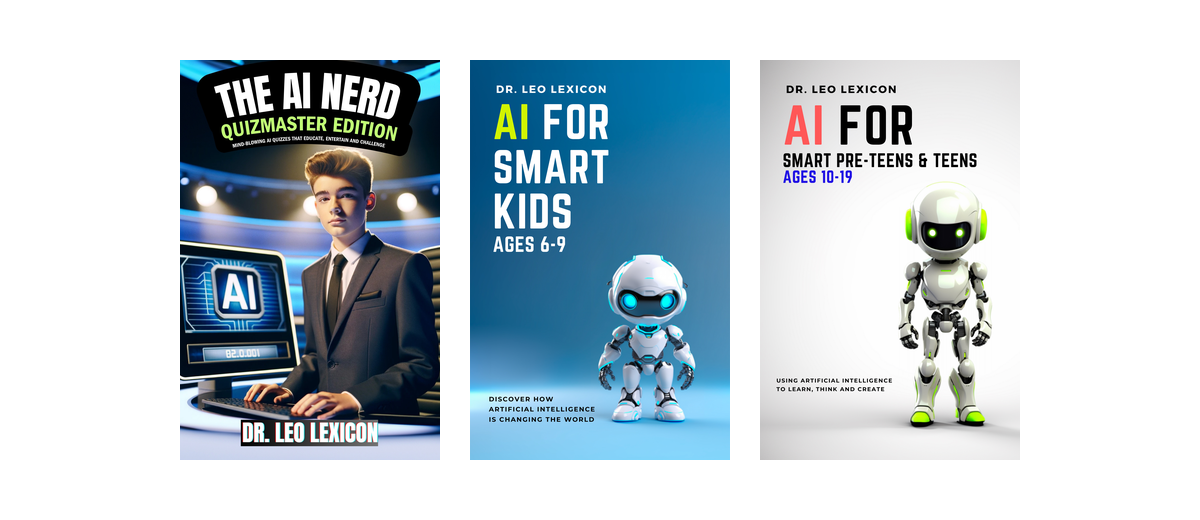
Books that explain artificial intelligence clearly for young and curious readers.
View Bundle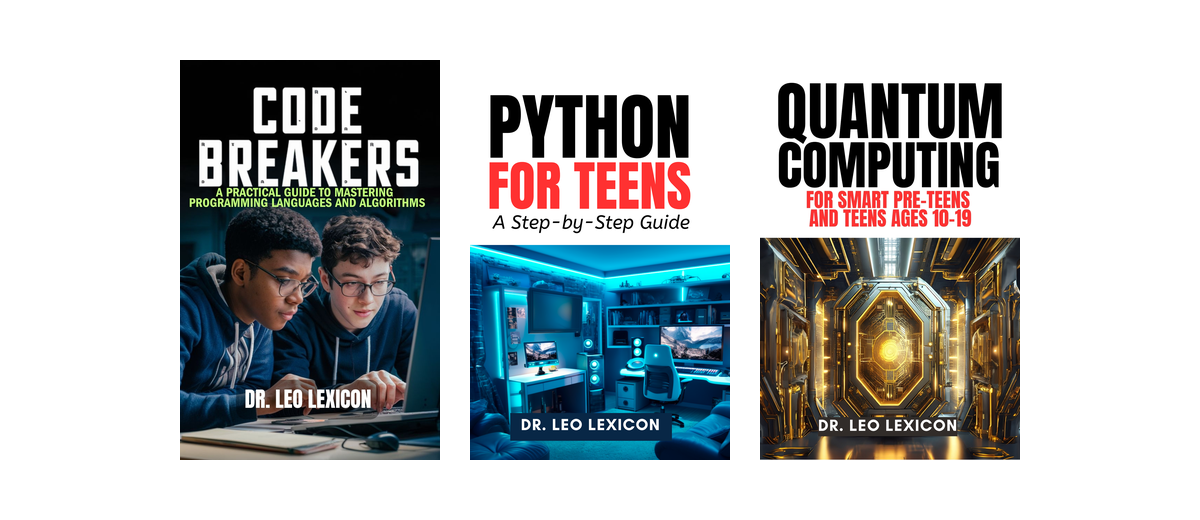
A practical introduction to coding concepts for young learners and beginners.
View Bundle