Entries
34
AI lexicon entries currently assigned to this category.

AI Topic Category
This page maps the Knowledge Representation, Reasoning and Planning portion of the Lexicon Labs AI encyclopedia. It brings together the main concepts in this category, the tracks that organize them, and the related books and guides that make the topic easier to study.
Entries
AI lexicon entries currently assigned to this category.
Tracks
Taxonomy tracks that sit inside this category.
Top Entry Types
The most common entry types appearing in this topic cluster.
Knowledge Representation, Reasoning and Planning is one of the active taxonomy categories in the Lexicon Labs AI encyclopedia. The current dataset includes 34 entries in this area, which makes it large enough to function as a real discovery surface rather than a placeholder page.
Use the sample entries as a fast orientation layer, then move into the AI encyclopedia preview or the related paperbacks and bundles if you want a longer learning path.
Track in Knowledge Representation, Reasoning and Planning.
Track in Knowledge Representation, Reasoning and Planning.
Knowledge graph reasoning involves using knowledge graphs to perform logical inference and answer complex queries by traversing relationships between entities.
Ontology engineering is the systematic process of building formal knowledge representations called ontologies. It involves defining concepts, properties, and relationships within a specific domain to structure information for AI systems.
First-order theorem proving is an automated reasoning technique that determines if a logical statement (theorem) is a consequence of a set of axioms expressed in first-order logic. It uses formal methods like resolution to construct.
Resolution theorem proving is an automated reasoning technique. It determines if a logical statement is entailed by a set of axioms by converting them to conjunctive normal form and applying the resolution rule to find.
A unification algorithm finds a substitution for variables in two logical expressions, making them identical if such a substitution exists. It's crucial for automated reasoning systems like resolution theorem proving.
Forward chaining is a reasoning method in AI that starts with known facts and applies inference rules to derive new conclusions, often used in rule-based systems.
Backward chaining is a reasoning method in AI that starts with a goal and works backward to find supporting evidence using inference rules.
A truth maintenance system (TMS) is an AI framework for managing multiple possible truths or assumptions, ensuring consistency and supporting reasoning under uncertainty.
Assumption-based reasoning is an AI technique that draws conclusions from a set of explicit assumptions. When inconsistencies emerge, the system identifies and retracts conflicting assumptions to maintain logical coherence, allowing for flexible knowledge updates.
A Probabilistic Graphical Model (PGM) uses graphs to represent conditional dependencies between random variables. It combines probability and graph theory for efficient representation and inference in complex systems, including Bayesian networks and Markov random fields.
Bayesian network inference calculates the probability of unobserved variables given observed evidence within a Bayesian network. It leverages conditional probabilities to reason about uncertain events and their dependencies.
A Markov random field (MRF) is a probabilistic graphical model that uses an undirected graph to represent dependencies among random variables, where connected variables directly influence each other.
AI Hub
This hub connects the main AI learning surfaces on Lexicon Labs into one path: the encyclopedia preview, student-friendly books, themed bundles, and the tools that help readers turn concepts into working understanding.
Open GuidePaperback Hub
This page groups together Lexicon Labs paperback titles that help younger readers understand artificial intelligence, computation, and the people behind modern computing.
Open GuideTurn messy notes into study-ready flashcards and CSV exports for spaced repetition apps.
Open ToolTransform notes into visual diagrams and export them for sharing or studying.
Open ToolCreate citations for papers fast with APA/MLA formatting and copy-ready output.
Open ToolAnalyze clarity in essays, emails, and articles with readability scores and instant issue flags.
Open Tool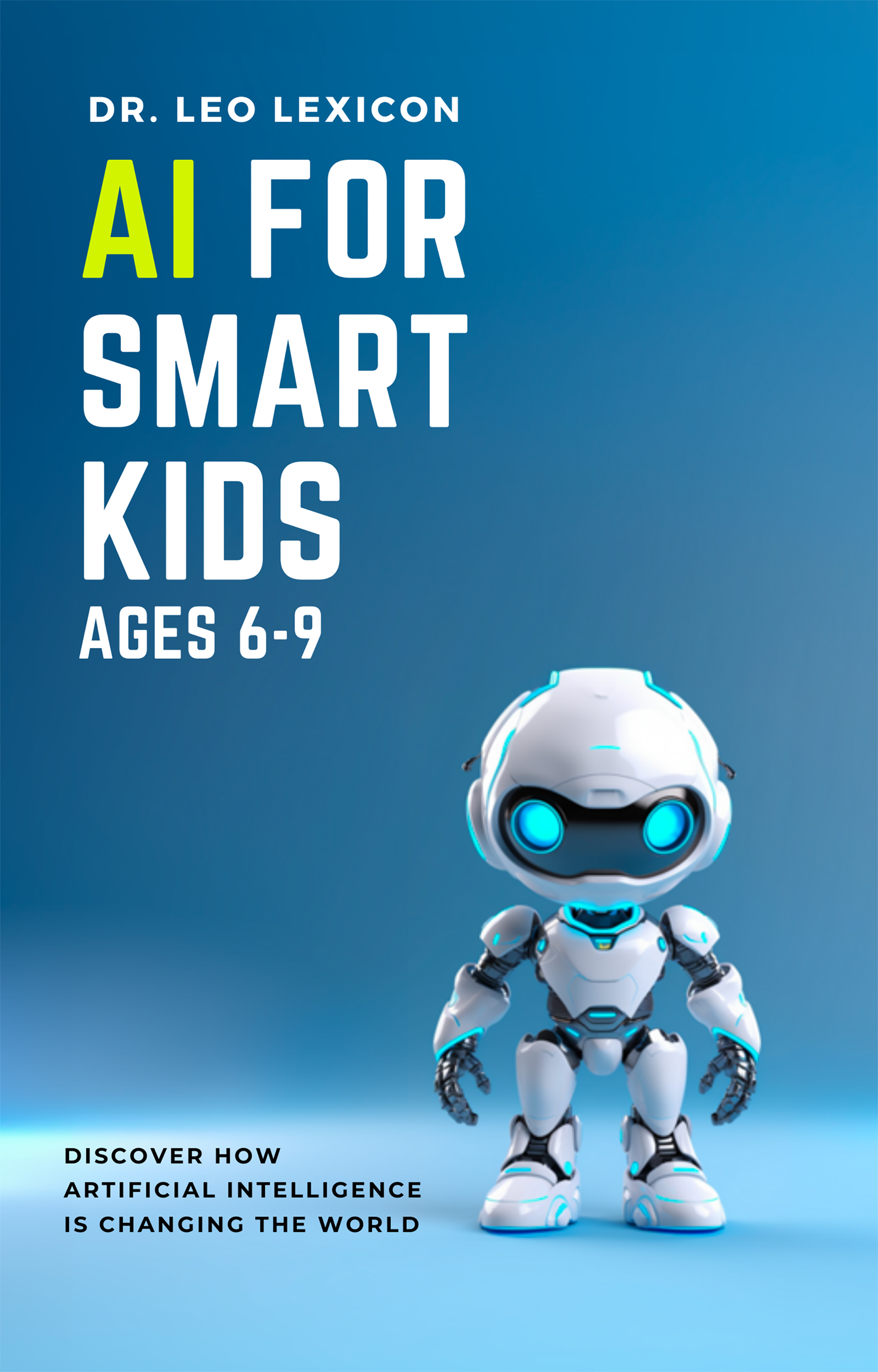
A clear and engaging guide to artificial intelligence for younger readers who are curious about how smart systems work.
View Paperback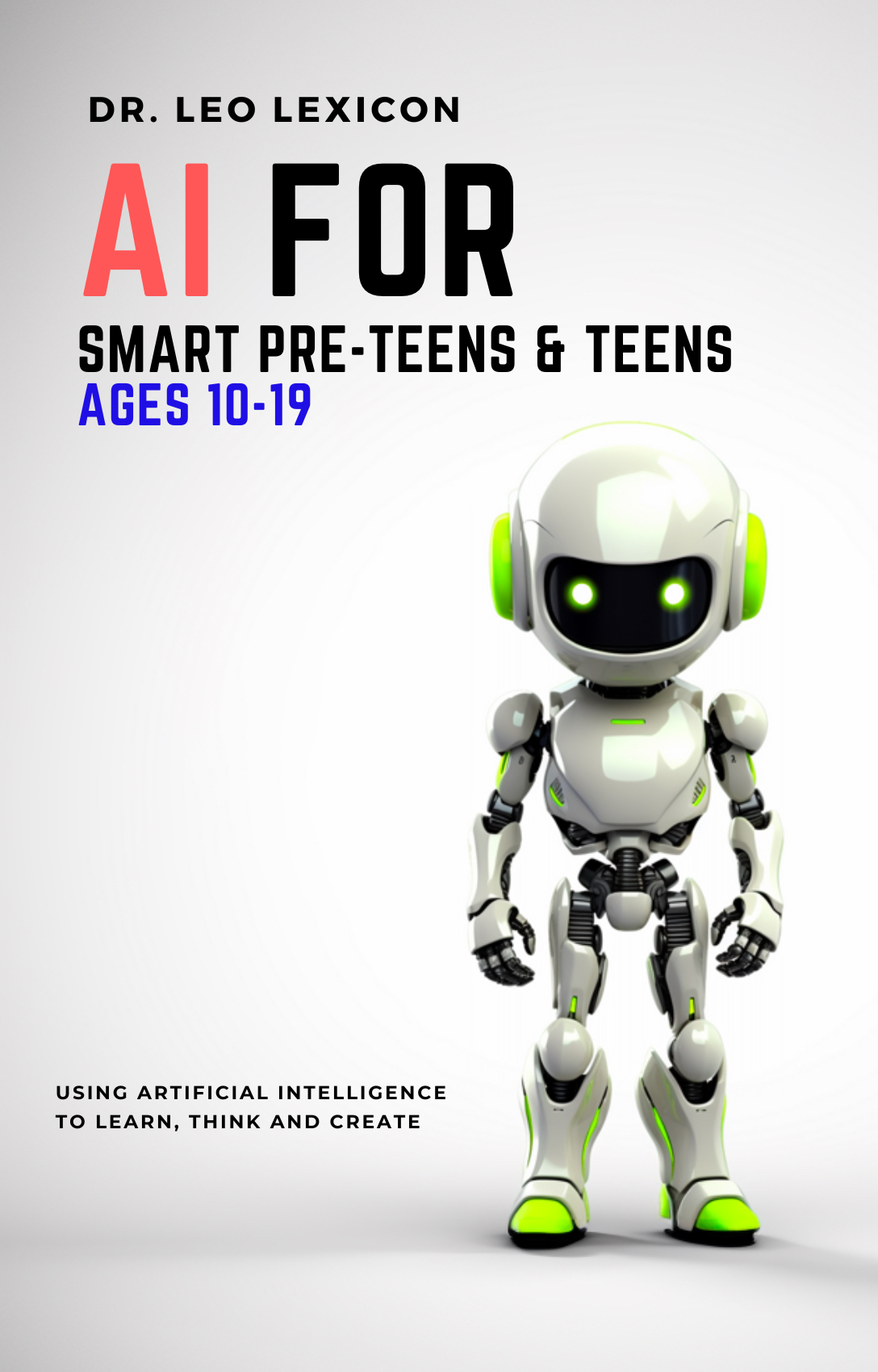
A student-friendly intro to AI concepts, real-world use cases, and practical skills for the next generation.
View Paperback
A biography of Alan Turing, the trailblazing mathematician and codebreaker whose ideas shaped modern computing and artificial intelligence.
View Paperback
Books that explain artificial intelligence clearly for young and curious readers.
View Bundle
A practical introduction to coding concepts for young learners and beginners.
View Bundle