Entries
100
AI lexicon entries currently assigned to this category.

AI Topic Category
This page maps the Computer Vision portion of the Lexicon Labs AI encyclopedia. It brings together the main concepts in this category, the tracks that organize them, and the related books and guides that make the topic easier to study.
Entries
AI lexicon entries currently assigned to this category.
Tracks
Taxonomy tracks that sit inside this category.
Top Entry Types
The most common entry types appearing in this topic cluster.
Computer Vision is one of the active taxonomy categories in the Lexicon Labs AI encyclopedia. The current dataset includes 100 entries in this area, which makes it large enough to function as a real discovery surface rather than a placeholder page.
Use the sample entries as a fast orientation layer, then move into the AI encyclopedia preview or the related paperbacks and bundles if you want a longer learning path.
Track in Computer Vision.
Track in Computer Vision.
Computer Vision is a field of artificial intelligence that enables computers to "see" and interpret digital images and videos. It involves teaching machines to understand and process visual data from the real world.
David Marr was a British neuroscientist and computer scientist who developed a highly influential computational theory of vision in the 1970s. His framework proposed a multi-level approach to understanding how the brain processes visual information.
Marr's Vision Theory proposes a computational framework for how humans and machines perceive 3D objects from 2D images, progressing through primal sketch, 2.5D sketch, and 3D model representation stages.
Edge detection is a computer vision technique that identifies points in a digital image where the image brightness changes sharply, often representing boundaries of objects or surfaces. Algorithms like Canny are commonly used.
The Canny Edge Detector is a multi-stage algorithm in computer vision designed to find optimal edges in images. It aims for low error rates, good localization of edges, and minimal spurious responses, making it highly.
John Canny is a computer scientist and professor at UC Berkeley, renowned for developing the Canny Edge Detector. This influential algorithm is a cornerstone of classical computer vision, crucial for identifying significant boundaries in images.
The Hough Transform is a classical computer vision technique used to detect specific shapes, like lines or circles, within an image. It works by mapping image points to a parameter space, where shape parameters accumulate.
SIFT is a computer vision algorithm that detects and describes distinctive local features in images. It's robust to changes in scale, rotation, and illumination, crucial for object recognition and image matching.
David Lowe is a Canadian computer scientist renowned for creating the Scale-Invariant Feature Transform (SIFT) algorithm. SIFT is a foundational computer vision method for detecting and describing image features robustly across scale and rotation changes.
SURF (Speeded Up Robust Features) is a computer vision algorithm for detecting and describing distinctive local features in images, offering faster performance than SIFT for tasks like object recognition and 3D reconstruction.
ORB (Oriented FAST and Rotated BRIEF) is a computationally efficient computer vision algorithm. It detects distinctive keypoints and generates robust descriptors, enabling fast object recognition, image stitching, and visual tracking applications.
Histogram of Oriented Gradients (HOG) is a feature descriptor in computer vision that counts occurrences of gradient orientations in localized portions of an image. It captures object shape and appearance by analyzing intensity gradients, making.
AI Hub
This hub connects the main AI learning surfaces on Lexicon Labs into one path: the encyclopedia preview, student-friendly books, themed bundles, and the tools that help readers turn concepts into working understanding.
Open GuidePaperback Hub
This page groups together Lexicon Labs paperback titles that help younger readers understand artificial intelligence, computation, and the people behind modern computing.
Open GuideTurn messy notes into study-ready flashcards and CSV exports for spaced repetition apps.
Open ToolTransform notes into visual diagrams and export them for sharing or studying.
Open ToolCreate citations for papers fast with APA/MLA formatting and copy-ready output.
Open ToolAnalyze clarity in essays, emails, and articles with readability scores and instant issue flags.
Open Tool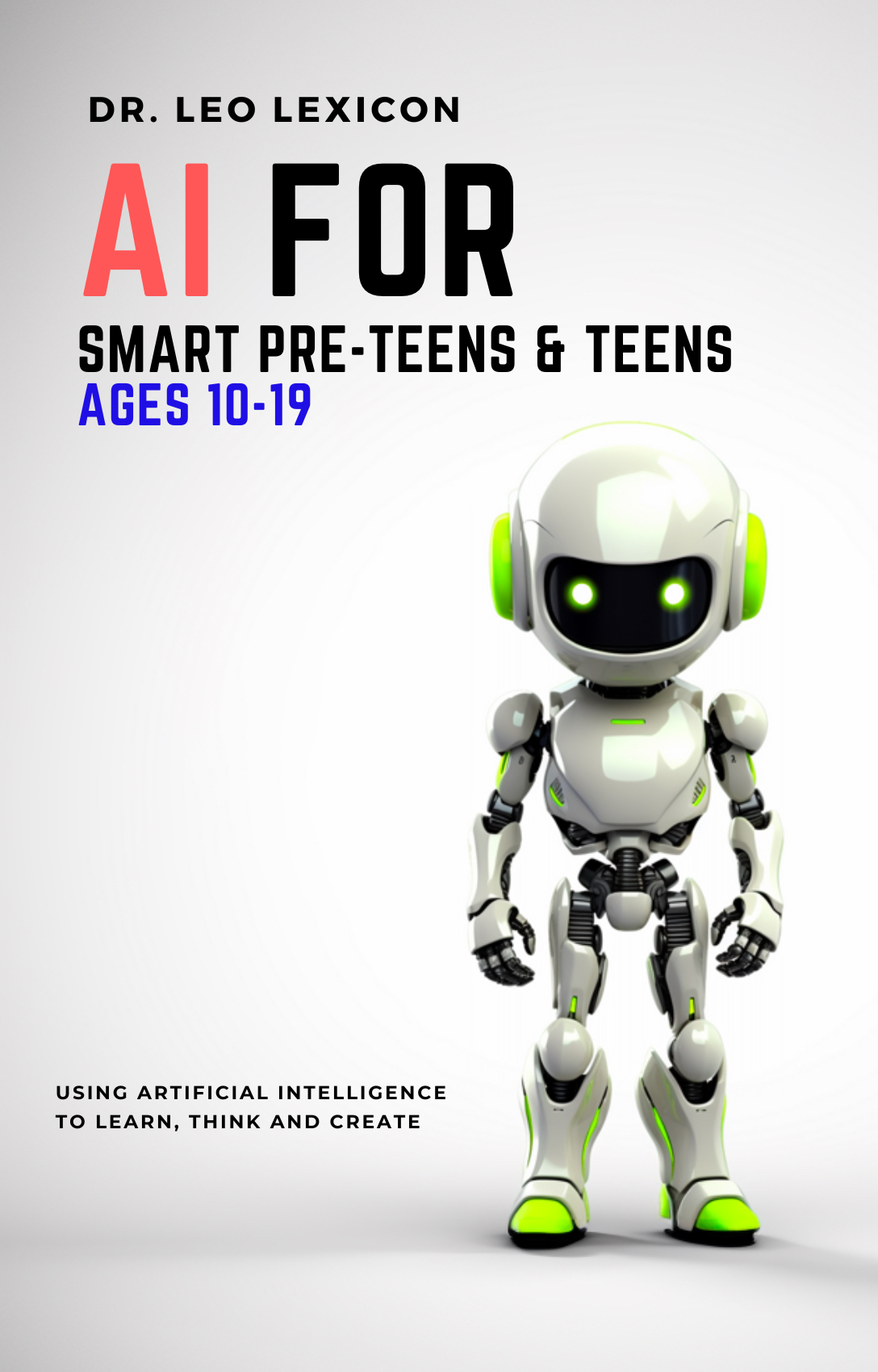
A student-friendly intro to AI concepts, real-world use cases, and practical skills for the next generation.
View Paperback
An accessible primer on quantum computing fundamentals, from qubits and superposition to real-world applications.
View Paperback
Learn core Python programming with approachable examples designed for teen learners and first-time coders.
View Paperback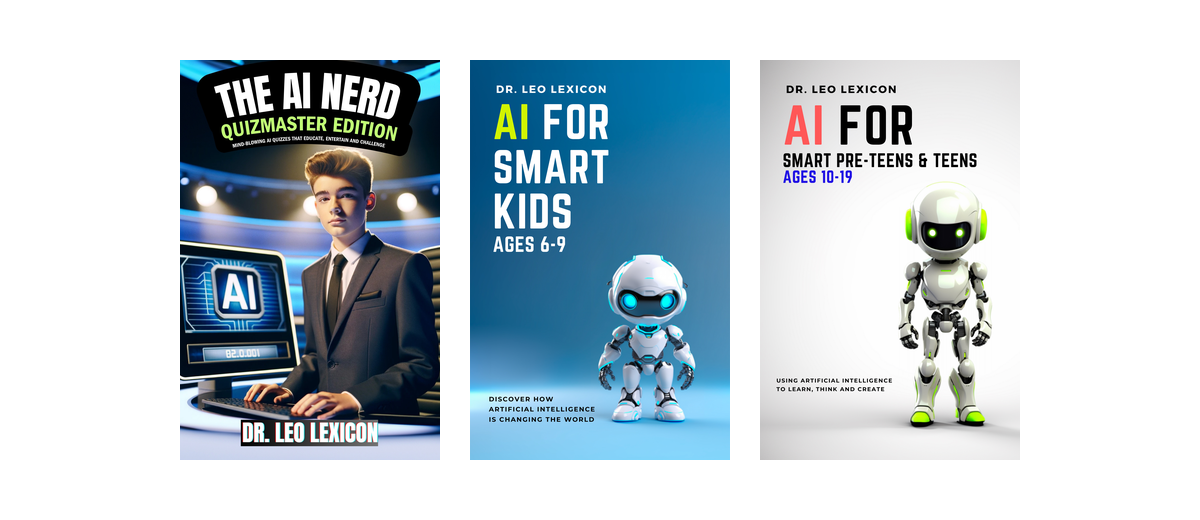
Books that explain artificial intelligence clearly for young and curious readers.
View Bundle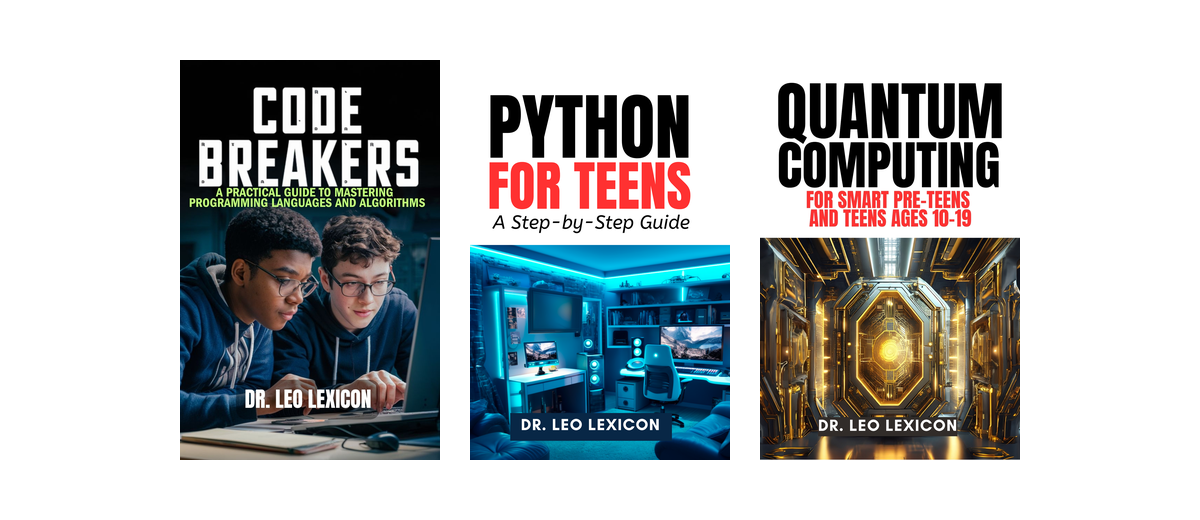
A practical introduction to coding concepts for young learners and beginners.
View Bundle